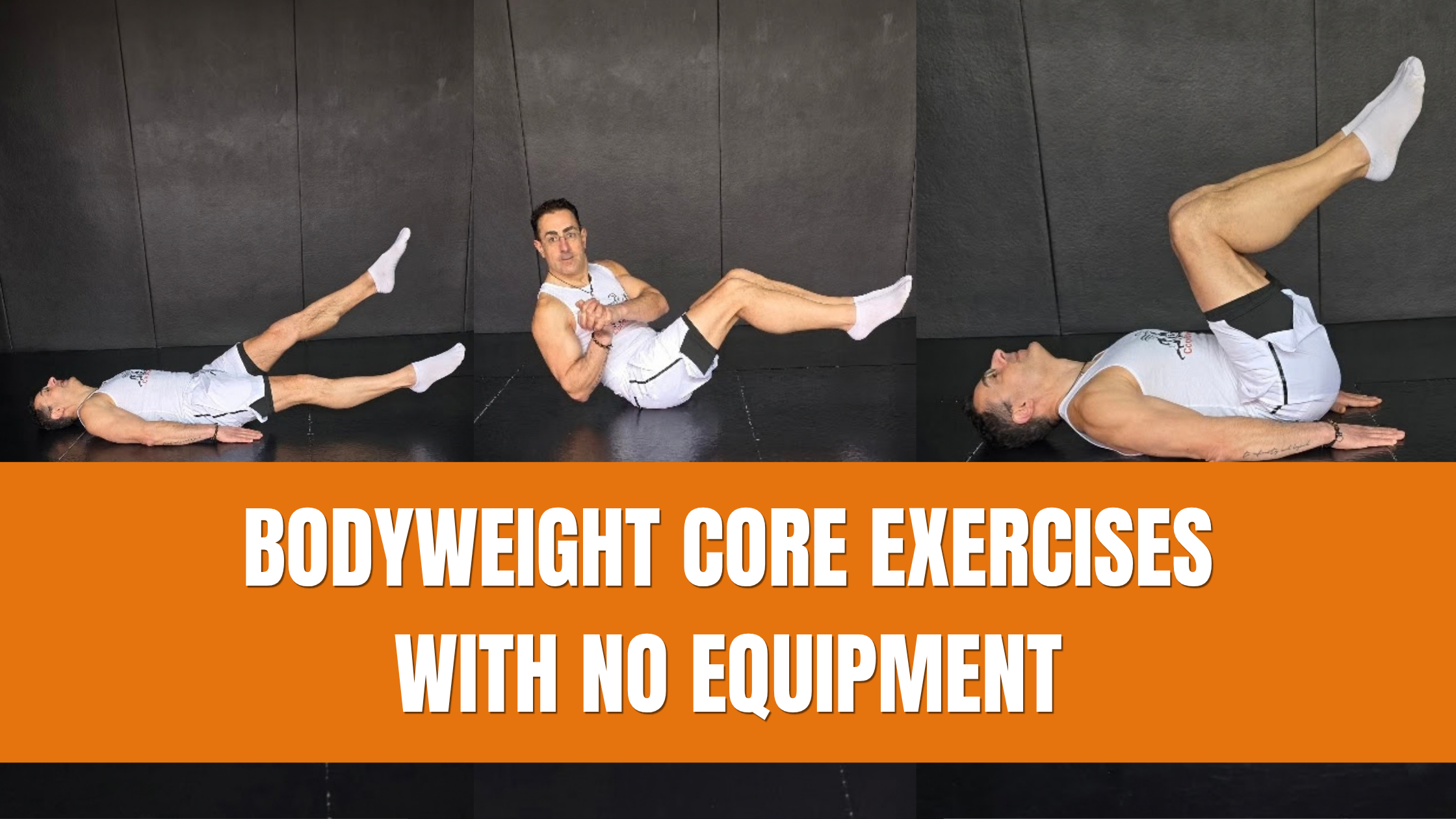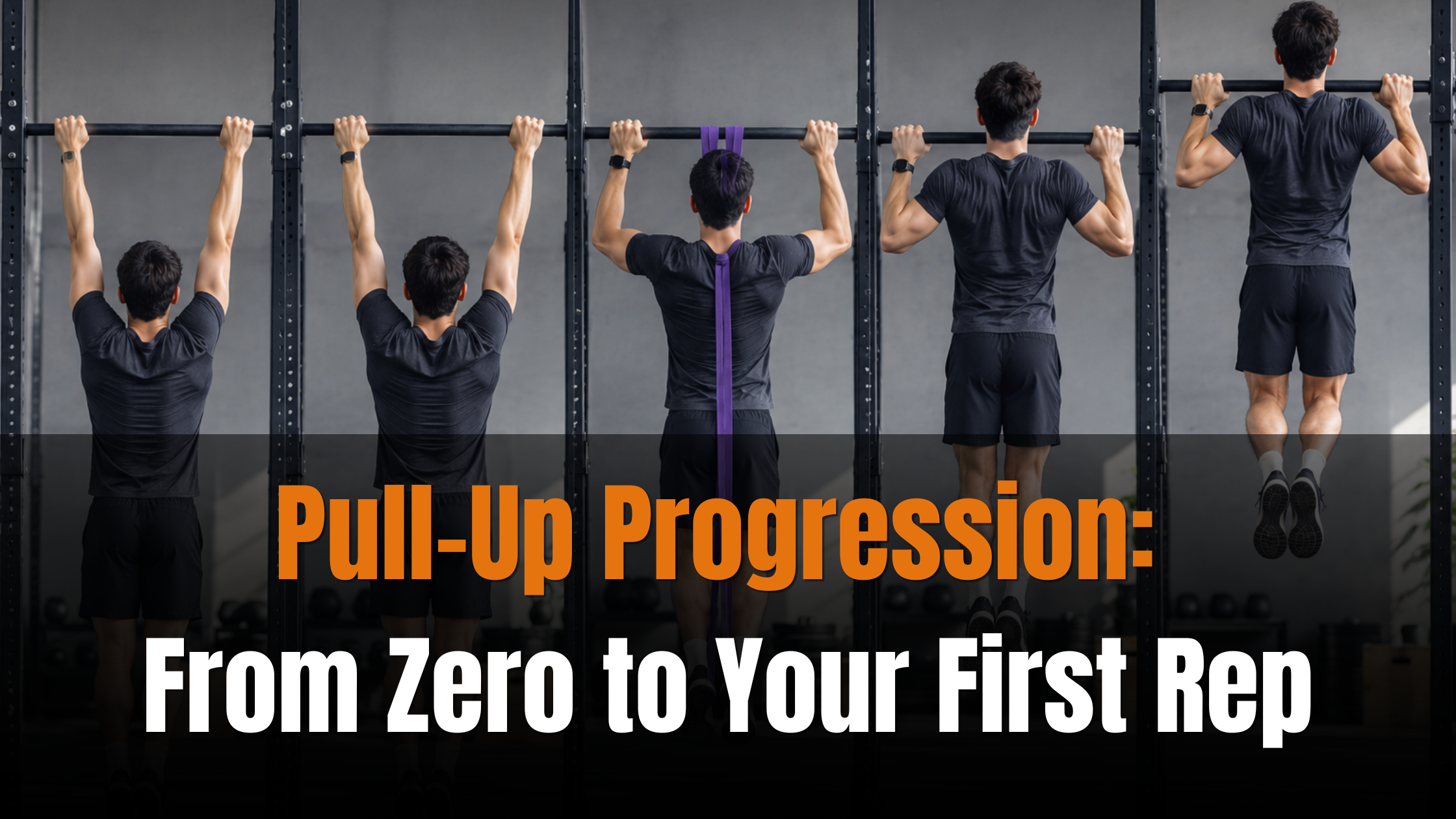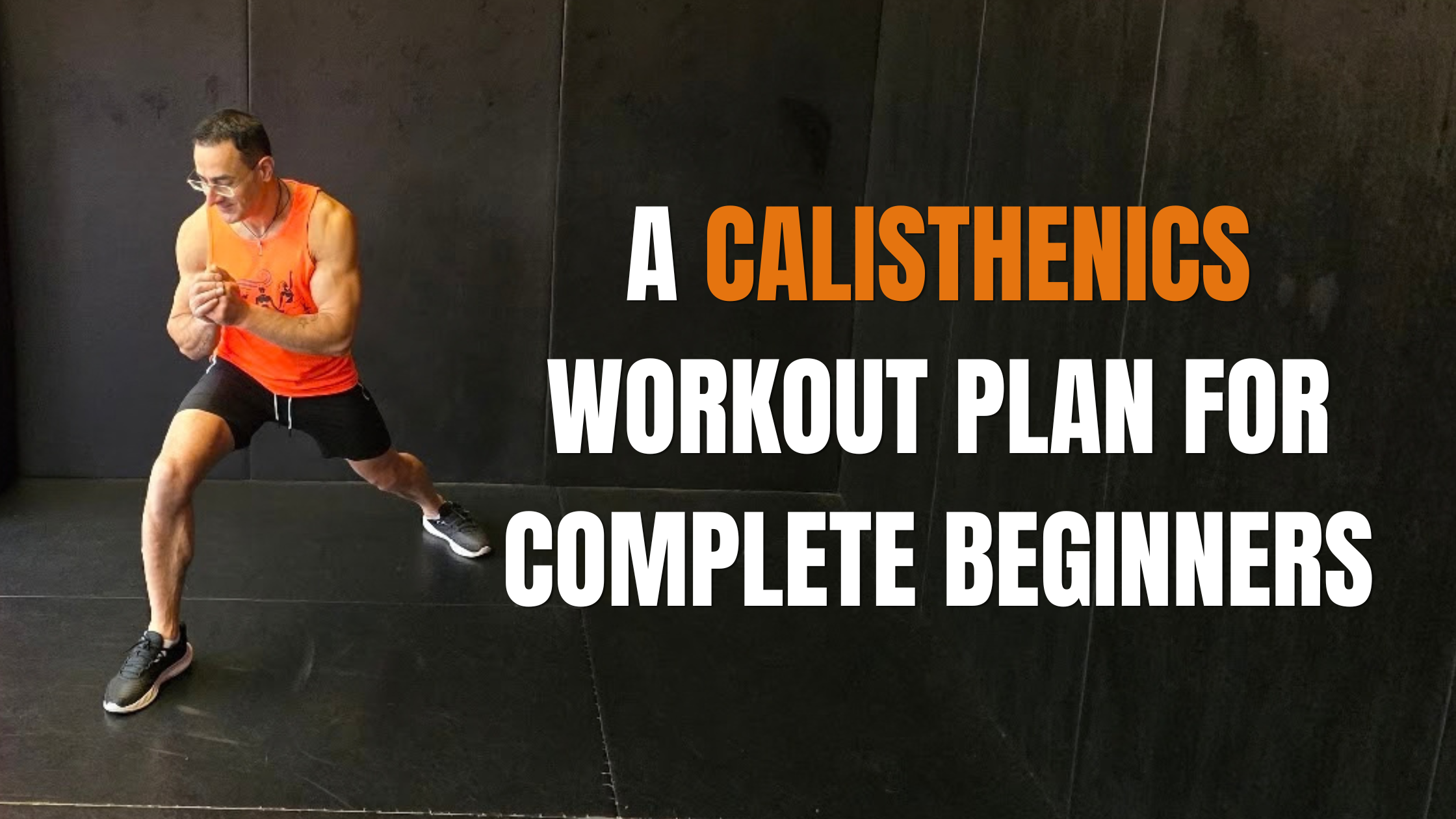

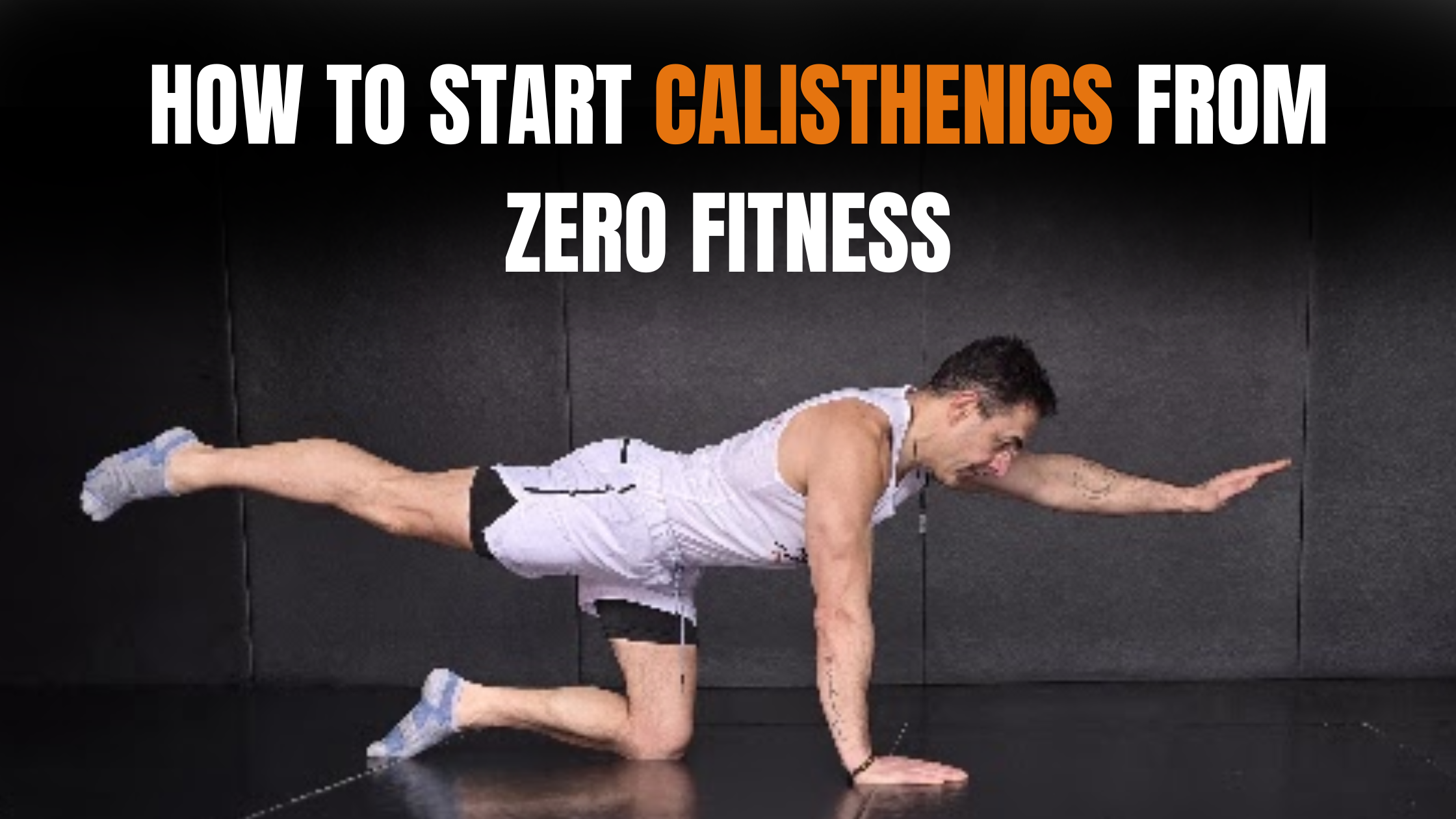
To start calisthenics from zero fitness, pick one easy version of five basic moves and train three times a week for 20 minutes. Use a wall push-up, chair squat, glute bridge, knee plank and dead bug. Do 2 sets of 8 reps each. Add a rep a week and only make a move harder once your form holds.
Most guides assume you can already do a press-up. If you cannot, you need a smaller starting point, not more willpower. This is the smaller starting point. For background on the training style itself, see our guide to calisthenics for beginners.
Can you start calisthenics with no fitness at all?
Yes. Calisthenics scales down further than any other kind of strength training, because you change the angle of your body rather than the weight on a bar. A push-up against a wall and a push-up on the floor are the same movement at different loads.
Being unfit is a starting position, not a barrier. The thing to fix is the size of the first step.
Your first week, move by move
Do the five moves below three times in week one, for example Monday, Wednesday and Saturday. Two sets of each. Rest 60 seconds between sets.
| Move | Easier version to start with | Sets and reps | What it trains |
|---|---|---|---|
| Push | Wall push-up | 2 x 8 | Chest, shoulders, arms |
| Squat | Sit to chair and stand | 2 x 8 | Legs and hips |
| Hinge | Glute bridge | 2 x 10 | Glutes and lower back |
| Core hold | Knee plank | 2 x 15 sec | Trunk and shoulders |
| Core control | Dead bug | 2 x 6 per side | Deep core and breathing |
The whole session takes about 20 minutes with the warm-up. If a set feels impossible, cut the reps in half and keep going. Finishing the session matters more than hitting the number. Once every move here feels steady, step up to the full beginner calisthenics workout.
How to warm up when you are stiff
Spend five minutes moving every joint before your first set. Stiffness in the morning or after a desk day means your hips, spine and shoulders need time before they take load.
March on the spot for a minute. Roll your shoulders ten times each way. Do ten slow hip circles per side. Add ten cat cow movements on all fours. Finish with five slow squats to a chair. Breathe through your nose the whole time. Years at a desk usually need more than five minutes, so pair the plan with our mobility training.
How to know if the level is right
The right level lets you finish every rep with the same shape you started with. If rep eight looks like rep one, the level is correct. If your hips sag on rep four of a plank, or your back rounds on a squat, drop to an easier version.
A simple check: you should finish a set feeling you had two more reps left. Working to complete failure in your first month builds soreness, not strength.
When to make a move harder
Move up when you can finish both sets at the top of the rep range for two sessions in a row. Take one step at a time.
Push: wall push-up, then worktop push-up, then knee push-up, then floor push-up.
Squat: sit to chair, then chair tap without sitting, then full squat, then slow three second lowering.
Hinge: glute bridge, then single leg glute bridge.
Core hold: knee plank, then full plank, then full plank with one foot lifted.
Core control: dead bug with bent legs, then dead bug with a straight leg reach.
Adding a third set is also a step up. You do not have to change the move to make the session harder.
How often should a complete beginner train?
Three sessions a week, with a rest day between each. Muscles grow on the rest day, not during the set. Three sessions leaves enough recovery time and is a schedule most people keep for months.
Walk on the days between. Twenty minutes of walking helps blood flow and takes the edge off soreness. A ready made weekly pattern sits in our free calisthenics workout.
What to expect in the first eight weeks
Week 1 and 2: stiffness two days after each session. Coordination improves fast. Little visible change.
Week 3 and 4: the warm-up stops feeling like work. Reps go up.
Week 5 to 8: most people move up at least one step on the push and the plank. Clothes often fit differently around the waist and shoulders.
Mistakes that stop beginners
Starting with five sessions a week. Nearly everyone quits by week three.
Copying a video made for a trained body. A muscle-up tutorial is not a starting point.
Skipping the easier version out of pride. A wall push-up done well beats a floor push-up done badly.
Measuring by soreness. Soreness tracks novelty, not progress.
Changing the plan weekly. Repeat the same five moves for at least six weeks.
If you want someone to set the pace and check your form, our one to one calisthenics coaching does exactly that.
FAQ
Can calisthenics be self-taught?
Yes. The basic moves need no coach to learn. Film yourself from the side once a fortnight and compare against a form guide. A coach speeds things up but is not required to start.
Is 40 too late to start calisthenics?
No. Bodyweight training suits people in their 40s and 50s well, because you control the load precisely and there is nothing heavy to drop. Start with easier versions and give yourself a longer warm-up.
How long does it take to get good at calisthenics?
Most beginners handle a full floor push-up and a 45 second plank within three to four months of steady training three times a week.
Do I need a pull-up bar to start?
No. The first eight weeks work fine with pushing, squatting and core work. Add a doorway bar later when you want to train pulling.
How many days a week should I do calisthenics as a beginner?
Three, with a rest day between sessions. Move up to four only after two months of steady training.